The Environment: Small Actions, Big Changes
Students read an article about a school that reduced its waste in one month, answer questions, complete a text with waste, reduce, reuse, recycle and save, match sentence halves with If… will (first conditional), read three points of view on the impact of small individual actions and answer open questions in writing.
Free, no card. Create your account and the activity is already there.
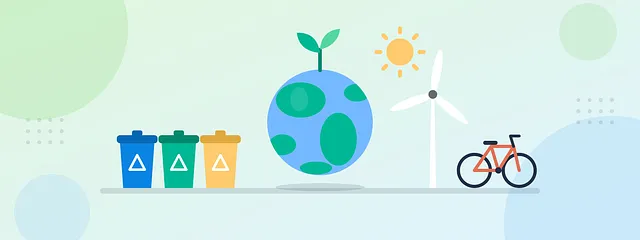
6 blocks, in class order
What's in this activity
-
Reading text One school, one month, less waste
-
Multiple-choice questions Check your understanding
-
Fill in the gaps Reduce, reuse, recycle: complete the text
-
Match the halves If we..., we will...: match the halves
-
Viewpoints for discussion Small Actions, Big Impact? Different Views on Saving the Planet
-
Open-ended questions Think and write
No login, no sign-up
Try it the way your students will
Answer freely: this is only a preview. Nothing is sent or saved.
One school, one month, less waste
Last month, Green Valley High School decided to take action to protect the environment. The students and teachers started a 30-day challenge to make their school greener and cleaner. Their goal was simple: reduce the amount of trash they produced every day.
First, the school banned single-use plastic. Every student received a reusable water bottle to use at school. Next, they set up a new recycling station in the main hallway. Students could now recycle paper, cardboard, and plastic items easily instead of throwing them away. In the cafeteria, they added a compost bin for food scraps like banana peels and leftover lunch.
Besides managing trash, the school wanted to save energy. Teachers asked students to turn off the lights and computers whenever they left a classroom. Changing this daily habit was simple, but it made a big difference.
However, the project was not always easy. The biggest difficulty they faced was getting everyone to sort their trash correctly. At first, many students accidentally put plastic bags into the compost bin, which ruined the food waste. To fix this, student volunteers stood near the bins during lunch to help their classmates.
By the end of the month, the results were amazing! The school managed to produce 40% less trash than the previous month. Furthermore, they cut their electricity bill significantly. The students learned that small changes in their daily routines can have a huge positive impact on the planet. Now, these green practices have become a permanent part of their school life.
Check your understanding
What was the main purpose of the 30-day challenge at Green Valley High School?
How did the school encourage students to stop using single-use plastic bottles?
What was the main challenge students had during the project?
How did student volunteers solve the problem in the cafeteria?
In the text, what does the word 'significantly' mean in the phrase 'cut their electricity bill significantly'?
Reduce, reuse, recycle: complete the text
If we..., we will...: match the halves
Match each condition with its result.
Left halves
Right halves
Small Actions, Big Impact? Different Views on Saving the Planet
I really believe that every small choice we make matters for the planet. When I started riding my bike to work and avoiding single-use plastic, my family and friends noticed and started doing the same. It is true that one person cannot stop climate change alone, but small habits build momentum. When thousands of people demand greener options, companies and governments are forced to change. It all starts with individual decisions.
I respect people who try to live green, but personal choices are just not fast enough to solve this crisis. As a business owner, I see that real change happens through innovation and technology at a big scale. For example, switching our factory to solar power reduced emissions way more than thousands of people using paper straws. We need clever business solutions and smart laws to make sustainable options cheap and easy for everyone.
When we look at the data, the situation is quite complex. Individual actions like recycling or eating less meat do reduce your personal carbon footprint, which is good. However, statistics show that a huge percentage of global pollution comes from big industries and energy production. So while lifestyle changes help raise public awareness, they cannot replace major policy shifts. We need both personal effort and structural reform to make a real difference.
Key Vocabulary
Discussion Questions
- 1 How does the Entrepreneur's focus on technology compare to the Environmentalist's idea about personal habits?
- 2 What small eco-friendly actions do you or your family already do in your daily life?
- 3 Do you think governments should force companies to be green, or should customers choose green products voluntarily?
Think and write
What main changes did Green Valley High School make to reduce trash and save energy during their 30-day challenge?
What problem did the school face with sorting trash, and how did student volunteers solve it?
Do you think small daily changes in a school can really help the environment? Explain your opinion using examples from the text or your own ideas.
Like it? Take it to your class
With the activity in your account, you share it by link or add it to a class, and follow each student's answers.
Keep looking
Similar activities
-
 B1 · suggested for 9th grade
Short Story: The Phone on the Bus (Reading Comprehension)
Students read a short story about Elisa, who finds a phone on a bus and has to decide what to do, with a vocabulary x-ray and a glossary. Then they answer questions, complete a summary of the story, use adjectives for feelings (tempted, ashamed, relieved…), match sentences with linking words, read three opinions about rewards and answer open questions. Reading · Vocabulary · Grammar · Speaking · Writing 60 min View activity -
 B1 · suggested for Adults
Job Interview: Getting Your First Job
Students listen to a voicemail inviting Camila to an interview and note down the details, read her interview at a bookstore, where she has no experience to show, match typical questions with good answers, complete Camila's draft answer, compare it with a more professional version (with a vocabulary x-ray) and answer open questions. Listening · Reading · Vocabulary · Writing 60 min View activity -
 B1 · suggested for High school
Jobs of the Future: Skills for Tomorrow
Students listen to a podcast clip about jobs that do not exist yet, answer questions, complete the transcript, read an article about the skills that will matter most in the future, match the halves of predictions (will, may, be likely to), read three points of view on robots and artificial intelligence at work and answer open questions. Listening · Reading · Vocabulary · Speaking · Writing 60 min View activity