Small Talk at Work: Breaking the Ice
Students listen to a podcast clip on why small talk matters at work, answer questions, complete the transcript with expressions such as break the ice and steer clear of, read a dialogue between colleagues at the coffee machine, match comments with natural replies, read three points of view on small talk and answer open questions.
Free, no card. Create your account and the activity is already there.
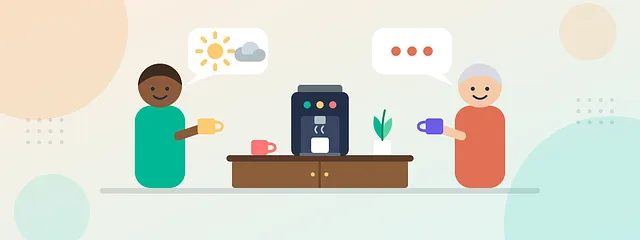
7 blocks, in class order
What's in this activity
-
Listening audio Podcast clip: Why small talk matters
-
Multiple-choice questions Listening: check your understanding
-
Fill in the gaps Listen again and complete the transcript
-
Reading text Monday morning at the coffee machine
-
Match the halves Keep the conversation going: match the replies
-
Viewpoints for discussion Small Talk at Work: Waste of Time or Essential Skill?
-
Open-ended questions Think and write
No login, no sign-up
Try it the way your students will
Answer freely: this is only a preview. Nothing is sent or saved.
Podcast clip: Why small talk matters
Listening: check your understanding
What is the main message of the podcast clip?
Which of the following topics is recommended for starting a conversation?
What does the phrase 'steer clear of' mean in the podcast clip?
According to the speaker, how should you ask questions during small talk?
What can be inferred about people's expectations during casual conversations?
Listen again and complete the transcript
Monday morning at the coffee machine
Mark: Good morning! Mind if I grab a quick coffee before the team meeting starts?
Sarah: Not at all! Go right ahead. So, how was your weekend?
Mark: It was fantastic, thanks. I finally tried that new Italian place downtown, Luigi's. The homemade pasta was incredible.
Sarah: Oh, I've been wanting to go there! Was it difficult to get a table?
Mark: A bit, but if you book a few days in advance, it's fine. By the way, if you go, you definitely have to try their tiramisu.
Sarah: Thanks for the recommendation, that sounds great! Speaking of Italian food, are you working on the new Milan expansion project?
Mark: Yes, I am. We're currently trying to finalize the initial market research. The deadline is next Friday, so things are getting a little intense.
Sarah: I can imagine. My team is handling the logistics side of that launch, so we will probably need to collaborate soon.
Mark: Definitely. We should catch up properly over lunch next week to align our timelines.
Sarah: That would be really helpful. Well, I see people are starting to head into the conference room. I'd better get going so we aren't late.
Mark: Same here. Nice talking to you, Sarah!
Sarah: You too, Mark. See you inside!
Keep the conversation going: match the replies
Match each comment or question with the most natural reply.
Left halves
Right halves
Small Talk at Work: Waste of Time or Essential Skill?
When I am at my desk, my main goal is to complete my daily tasks efficiently so I can leave on time. Spending twenty minutes making casual conversation by the coffee machine just feels like an unnecessary distraction from actual work. While I understand that friendly chats can help build a positive atmosphere, I prefer to keep a clear boundary between my professional responsibilities and my personal life. Building trust with my team comes from delivering quality work on time, not from discussing my weekend plans.
I used to think brief informal chats were a total waste of energy, but my opinion completely changed after working remotely for two years. Those brief, spontaneous conversations are often where the best ideas are born and where strong working relationships actually begin. Of course, nobody wants to spend the whole day discussing the weather, but taking five minutes to connect on a human level creates empathy. In a modern workplace, soft skills like rapport-building are just as crucial as technical talent.
For me, the value of informal workplace conversations depends entirely on the context and timing. A quick chat in the morning can break the ice and make the office feel much more welcoming, especially for new colleagues. However, if I am trying to meet a tight deadline, uninterrupted focus is far more important than being social. It is really about striking a healthy balance and reading the room so you do not disturb others when they are busy.
Key Vocabulary
Discussion Questions
- 1 How do the views of the Traditionalist and the Innovator differ regarding what actually builds trust among colleagues?
- 2 In your own professional or academic life, do you find informal chats helpful or distracting?
- 3 How can team members strike a balance between being friendly and respecting each other's need to focus?
Think and write
How does the tone of Mark and Sarah's conversation shift from the beginning to the middle, and what does this reveal about their professional relationship?
Based on the text, why is Mark's team currently experiencing a high-stress environment, and how do Mark and Sarah plan to address their shared responsibilities?
Why might casual workplace conversations, like the one between Mark and Sarah, be beneficial for project management within a company?
Like it? Take it to your class
With the activity in your account, you share it by link or add it to a class, and follow each student's answers.
Keep looking
Similar activities
-
 B1 · suggested for Adults
Job Interview: Getting Your First Job
Students listen to a voicemail inviting Camila to an interview and note down the details, read her interview at a bookstore, where she has no experience to show, match typical questions with good answers, complete Camila's draft answer, compare it with a more professional version (with a vocabulary x-ray) and answer open questions. Listening · Reading · Vocabulary · Writing 60 min View activity -
 B1 · suggested for High school
Jobs of the Future: Skills for Tomorrow
Students listen to a podcast clip about jobs that do not exist yet, answer questions, complete the transcript, read an article about the skills that will matter most in the future, match the halves of predictions (will, may, be likely to), read three points of view on robots and artificial intelligence at work and answer open questions. Listening · Reading · Vocabulary · Speaking · Writing 60 min View activity -
 A1 · suggested for 7th grade
Jobs and Occupations: What Do They Do?
Students guess the job in short riddles (I fix cars in a garage…), match each worker with what they do, read a text about the workers in Lia's neighborhood, answer questions, complete an interview with a bus driver (What do you do? Where do you work?) and answer open questions. Vocabulary · Reading · Grammar · Writing 45 min View activity